Aluminium PCB Manufacturer
Board & Assembly Supplier
WellPCB is a leading aluminum PCB manufacturer that fabricates and assembles PCBs to meet the specific needs of industries that require efficient thermal management.
Whether you’re working on LED lighting, power electronics, or automotive applications, our aluminum core PCBs are built to handle high thermal dissipation, ensuring your devices perform at their best.
- In-house aluminum PCB prototyping with 2 to 3 day lead times.
- Single-sided, single-sided double-layer/multi-layer, thermoelectric separation.
- Full surface finish options including ENIG, HASL, OSP, and ENEPIG.

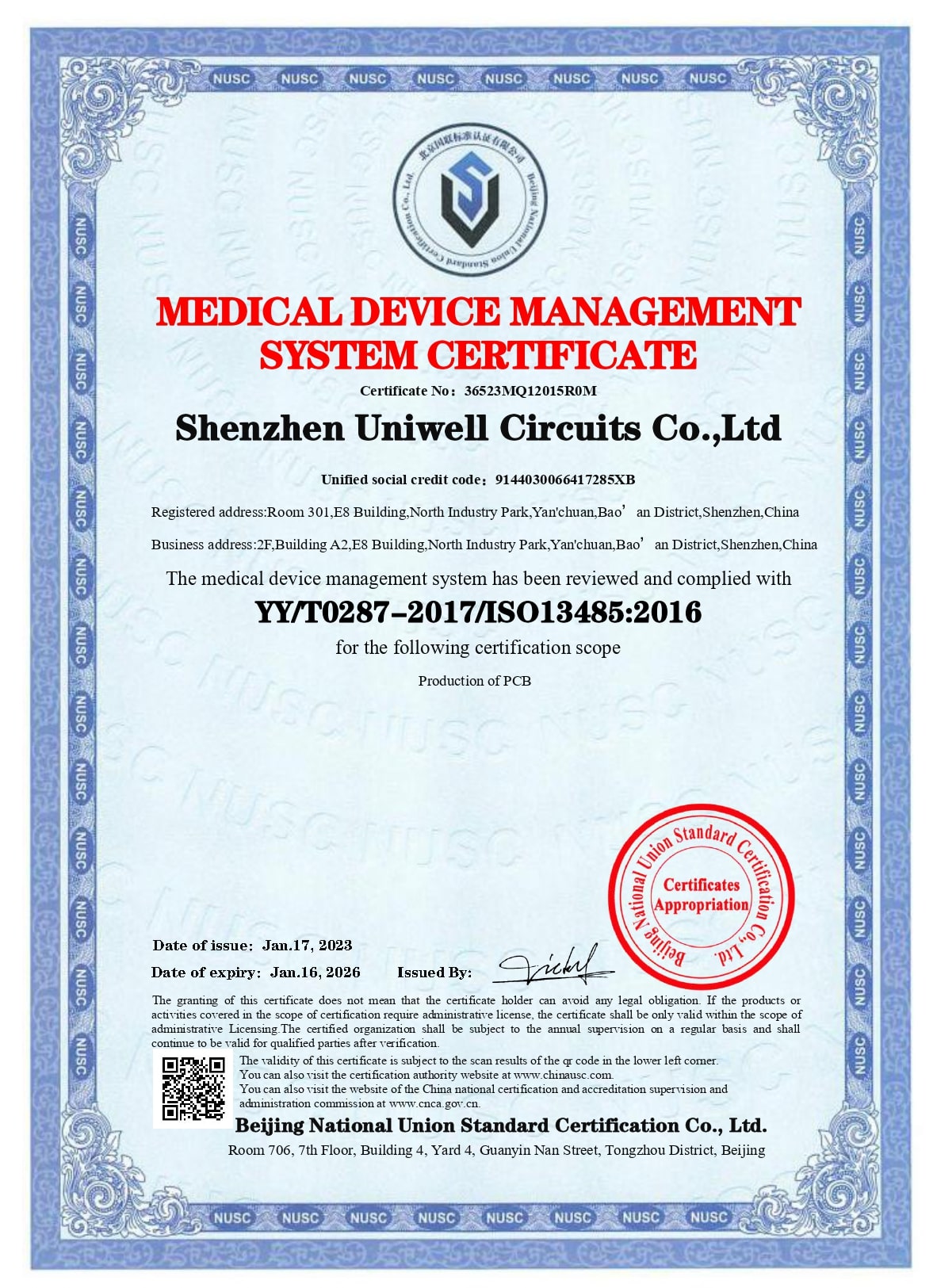
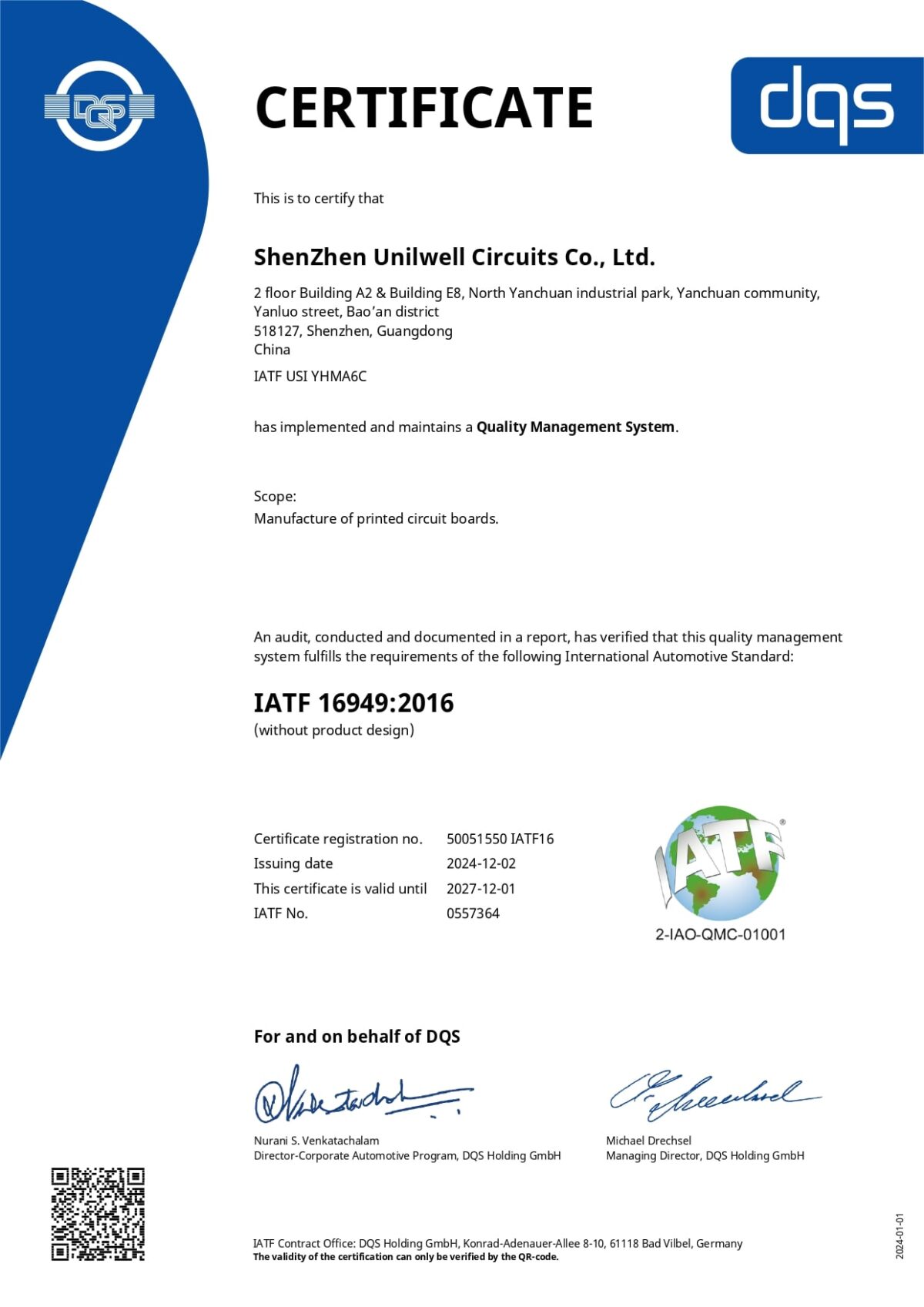
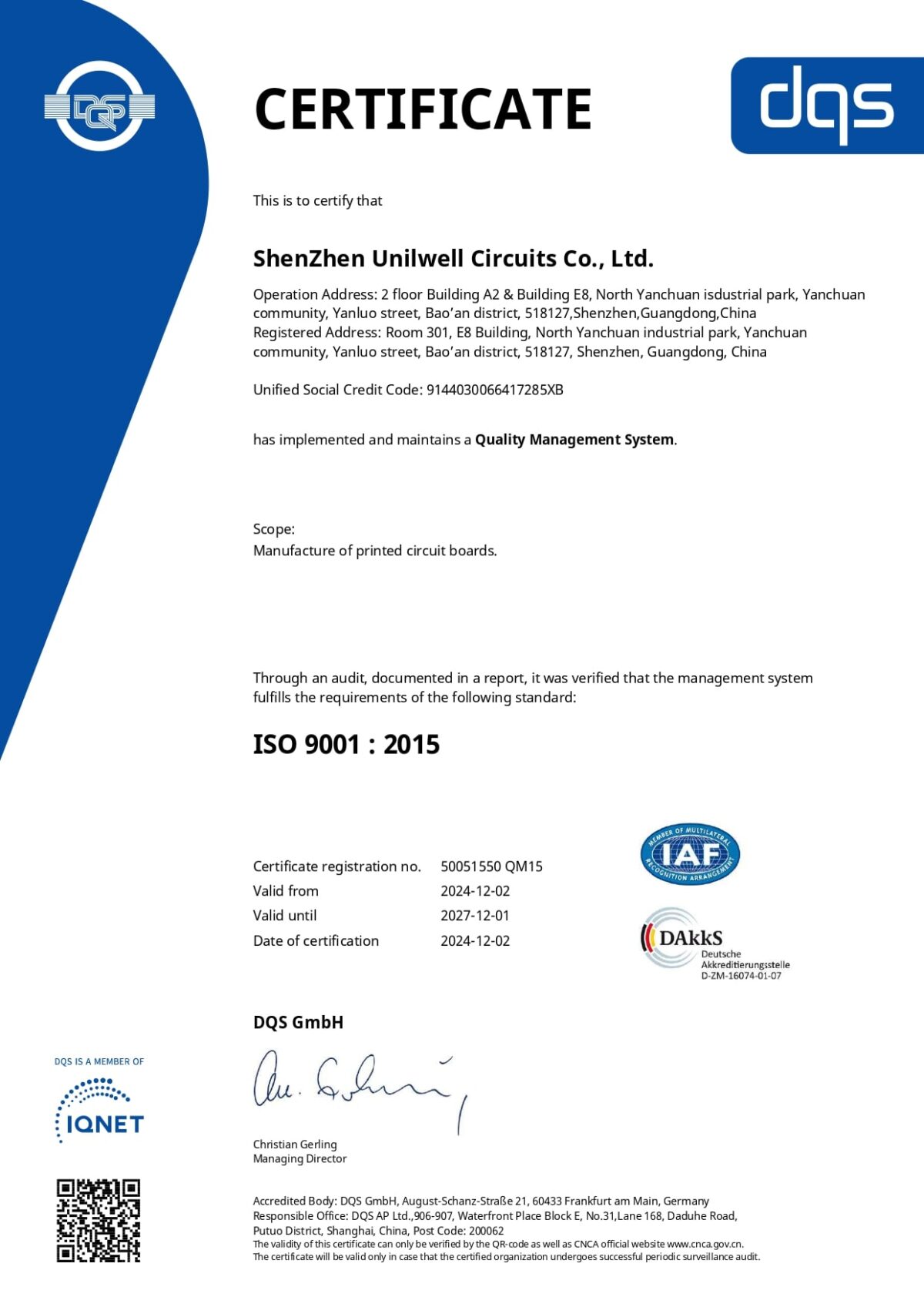
ISO9001 ISO13485
ISO14001

IATF
16949

IPC-A-610H International
Certification

Fully Automated
AOI Inspection

- PCB Manufacturer
- PCB Assembly Service
- Aluminum
Your Reliable Aluminum PCB Manufacturer
WellPCB manufactures high-quality aluminum PCBs for applications that demand excellent thermal conductivity, mechanical strength, and electrical insulation. Each board uses an aluminum core substrate, layered with a thermally conductive dielectric and copper circuitry to manage heat and maintain structural reliability.
We offer complete design review, in-house aluminum PCB assembly, and strict process control at every production stage. This includes AOI, X-ray inspection, E-test, and impedance control. All aluminum boards are produced in compliance with IPC, RoHS, and REACH standards.
Our Aluminum PCB Manufacturer
Capabilities
We build on aluminum cores with FR4, flex, or rigid-flex overlays. Available base materials include Rogers, aluminum, and high-Tg FR4.
Hybrid builds with thermally conductive dielectrics over isolated aluminum sections are supported for applications combining power and RF. Standard thermal conductivity options include 1.0 and 2.0 W/m·K.
| Feature | Specification |
|---|---|
| Core Material | Aluminum, Copper-Aluminum |
| Supported Stack-Up Types | Single-sided, single-sided double-layer/multi-layer, thermoelectric separation |
| Max. Finished Board Size | 22.5″ x 30″ |
| Board Thickness | Standard: 0.4 mm to 3.2 mm |
| Dielectric Thermal Conductivity | Standard: FR4, 1W/m·K, 2 W/m·K, 3 W/m·K (custom: up to 15 W/m·K) |
| Dielectric Thickness | 50 µm to 150 µm (±10%). |
| Copper Thickness | 0.33 to 10 oz |
| Surface Finishing | ENEPIG, Immersion Gold, Immersion Silver, Hard Gold, OSP |
| Min. PTH Hole | 0.8mm |
| Min. Trace Width/Space | 2.5 mil |
| Lead Time | 2-3 days |
Copper is available from 0.33 oz to 10 oz. Dielectric layers are laminated between copper and the aluminum base with thicknesses from 50 µm to 150 µm, depending on thermal resistance targets.
Minimum trace spacing is 2.5 mil. Board thicknesses range from 0.4 mm to 3.2 mm.
We support 0.8 mm minimum drill diameter and multiple via treatments: non-covered, tented, or resin-filled.
Through-hole vias that contact the aluminum core are isolated using pre-plated dielectric inserts or resin plugging.
Scoring, edge routing, and mechanical milling are performed using carbide or diamond tooling.
Available surface finishes include ENIG, ENEPIG, OSP, hard gold, immersion silver, and immersion tin.
Solder mask colors include green, black, white, red, and blue. White silkscreen is standard; black is optional for dark mask builds. Finish and mask alignment are verified using AOI.
Finish thickness and coverage are verified per IPC-4552 (ENIG), IPC-4553 (immersion silver), and IPC-4556 (ENEPIG) standards.
All builds are tested using flying probe and AOI. Optional tests include impedance validation and X-ray for multilayer or plated-via boards.
All electrical and visual inspections conform to IPC-TM-650 and IPC-9252 for net continuity and isolation thresholds.
Standard lead time for aluminum PCB prototypes is 2 to 3 working days. Depending on layer count and surface finish, full production runs are available on expedited schedules.
Why Choose WellPCB as
Your Aluminum PCB Manufacturer?
WellPCB manufactures aluminum PCBs with dielectric thicknesses from 50 to 200 µm and copper weights up to 10 oz. All designs undergo rigorous inspection and are fabricated to international standards.

Manufacturing Experience Since 2007
We manufacture single-layer, double-layer, and multilayer aluminum PCBs, including designs with plated through-holes and hybrid aluminum-FR4 constructions.
Internal DFM checks are performed using IPC-2221 design rules prior to CAM output.

Certified and Standard-Compliant Production
We manufacture to IPC-6012 for qualification and performance of rigid PCBs, IPC-A-610 Class 2 and Class 3 standards, and use IPC-2221 for internal DFM and stack-up review.
Materials are sourced from approved vendors for traceable performance consistency.

Comprehensive Electrical and Visual Testing
Impedance control and solder mask alignment are validated during production for boards requiring RF or fine-pitch trace integrity.

Wide Material and Stackup Options
We build on aluminum, copper core, FR4, high-Tg FR4, polyimide, and PTFE.
Aluminum base PCBs are offered with thermal conductivities from 1.0 to 15 W/m·K.
Hybrid stackups with FR4 or polyolefin over aluminum substrates are supported for power-signal partitioning or RF isolation.

Fast Response and Technical Support
Prototypes are available in 2 to 3 working days, depending on build configuration.
What are Aluminum PCBs?
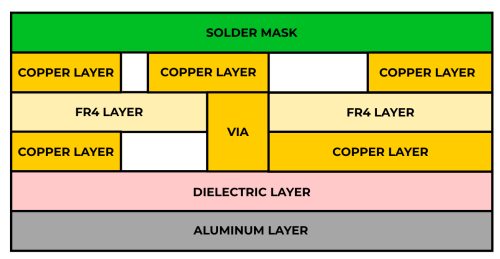
Aluminum PCBs are a type of metal-core printed circuit board (MCPCB) that uses an aluminum substrate as the base material instead of traditional fiberglass (FR4) or plastic substrates.
The aluminum core provides exceptional thermal conductivity, allowing the PCB to efficiently dissipate heat from components, making it ideal for high-power applications such as LED lighting, power electronics, and automotive systems.
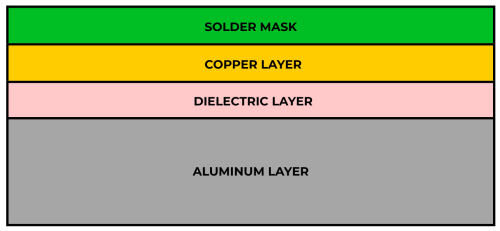
The main structure of an aluminum PCB:
1. Copper Layer:
Made of copper foil, this layer carries the electrical traces and provides high electrical conductivity.
2. Dielectric Layer:
A thermally conductive, electrically insulating layer, typically a ceramic-filled epoxy or polyimide, 50 to 200 µm thick, that transfers heat from the copper circuit to the aluminum base while preventing electrical shorts.
3. Aluminum Base Layer:
The aluminum alloy substrate is the core, providing mechanical strength and effective heat dissipation.
They can be structured in various ways, depending on the applications of the PCB.
Single-Layer, Single Sided
The simplest configuration. Components are mounted on one side, and heat flows from the copper trace through the dielectric to the aluminum base.
Two-Layer, Single-Sided
Features two copper layers and insulating layers on one side. Heat travels through each copper and dielectric layer to reach the aluminum base.
Two-Layer, Dual-Sided
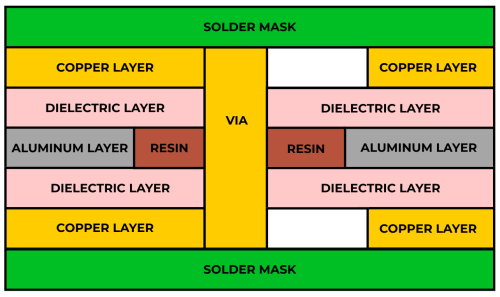
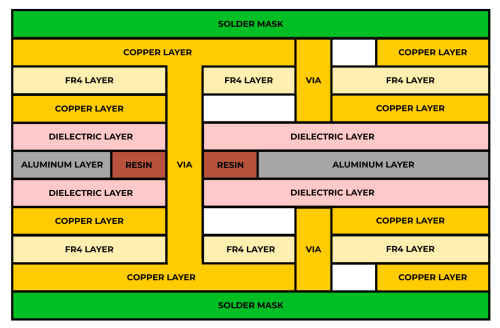
These are used when one side can’t fit all the required circuitry. Both sides support the mounting of components. The space between PTHs and the aluminum core is filled with resin. Heat moves through the copper and dielectric layers on both sides to the metal base.
Four-Layer, Dual-Sided
These have two copper layers and dual dielectric layers between component sides and the metal core. The longer thermal path lowers heat dissipation efficiency compared to single- or dual-layer PCBs.
Why is Aluminum Ideal for Circuit Boards?
Aluminum is widely used in circuit board manufacturing because of its ability to support high-power applications without increasing complexity or cost. Its metal core structure simplifies thermal design, offers mechanical rigidity, and reduces material weight. These properties make it a practical base for circuits in lighting systems, power equipment, and automotive electronics.

Heat Dissipation
Aluminum conducts heat away from components more efficiently than traditional FR4 substrates. This reduces thermal buildup during operation and helps maintain stable electrical performance in circuits that generate high localized temperatures.

Durability and Strength
Aluminum substrates resist mechanical stress, thermal warping, and cracking better than standard fiberglass, making them well-suited for use in systems exposed to vibration or heat cycling.

Lightweight
Aluminum weighs less than copper and steel while maintaining structural integrity. This is valuable in applications where reduced weight improves product size, handling, or installation.

Environmental Friendliness

Cost-Effectiveness
What Performance Capabilities
do Aluminum PCBs offer?
Aluminum PCBs are designed for environments where thermal load, mechanical stress, and dimensional accuracy must be tightly controlled. The combination of a metal core substrate, thermally conductive dielectric, and rigid structure gives aluminum PCBs predictable behavior under heat, vibration, and electrical noise.

Thermal Dissipation

Thermal Expansion

Dimensional Stability

Electromagnetic Shielding
What are the Different Types of Aluminum PCBs?
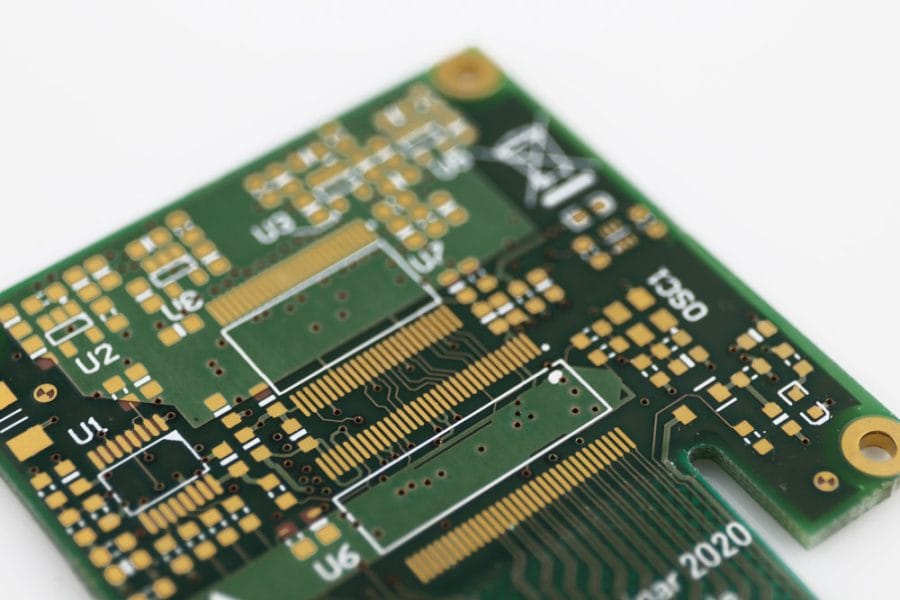
Aluminum PCB manufacturers classify these boards by how the core is structured, how heat is managed, and how components are mounted. The five primary types are single-layer, flexible, through-hole, multilayer, and hybrid. Depending on the application, each supports different mechanical demands, layer counts, and dielectric behavior.

Single-Layer Aluminum PCBs
The structure includes 1 to 3 oz copper, a 100 to 150 µm dielectric, and a 0.8 to 2.0 mm aluminum substrate.
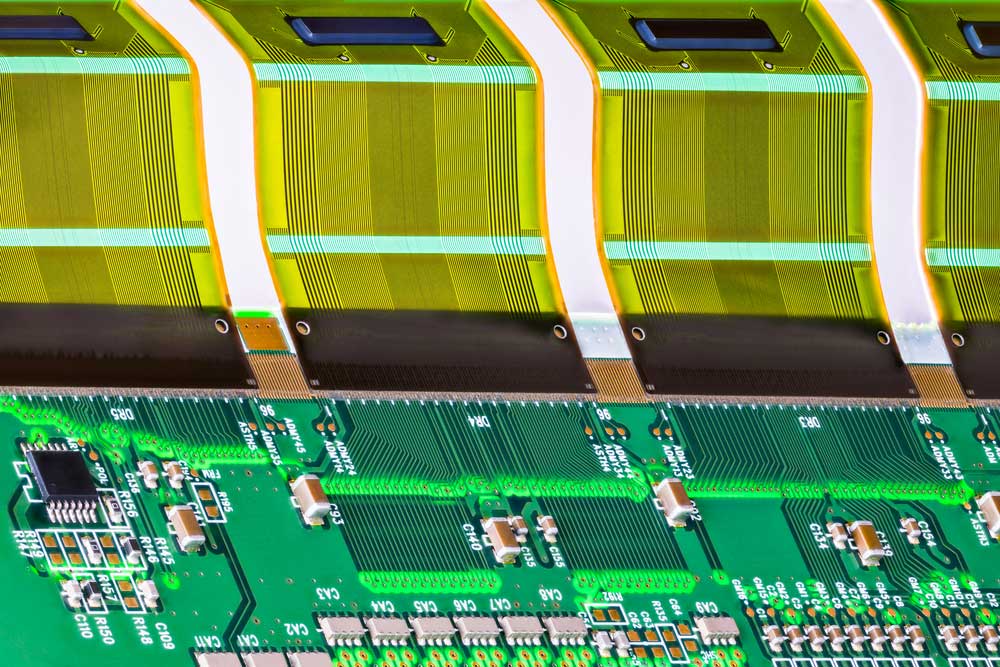
Flexible Aluminum PCBs
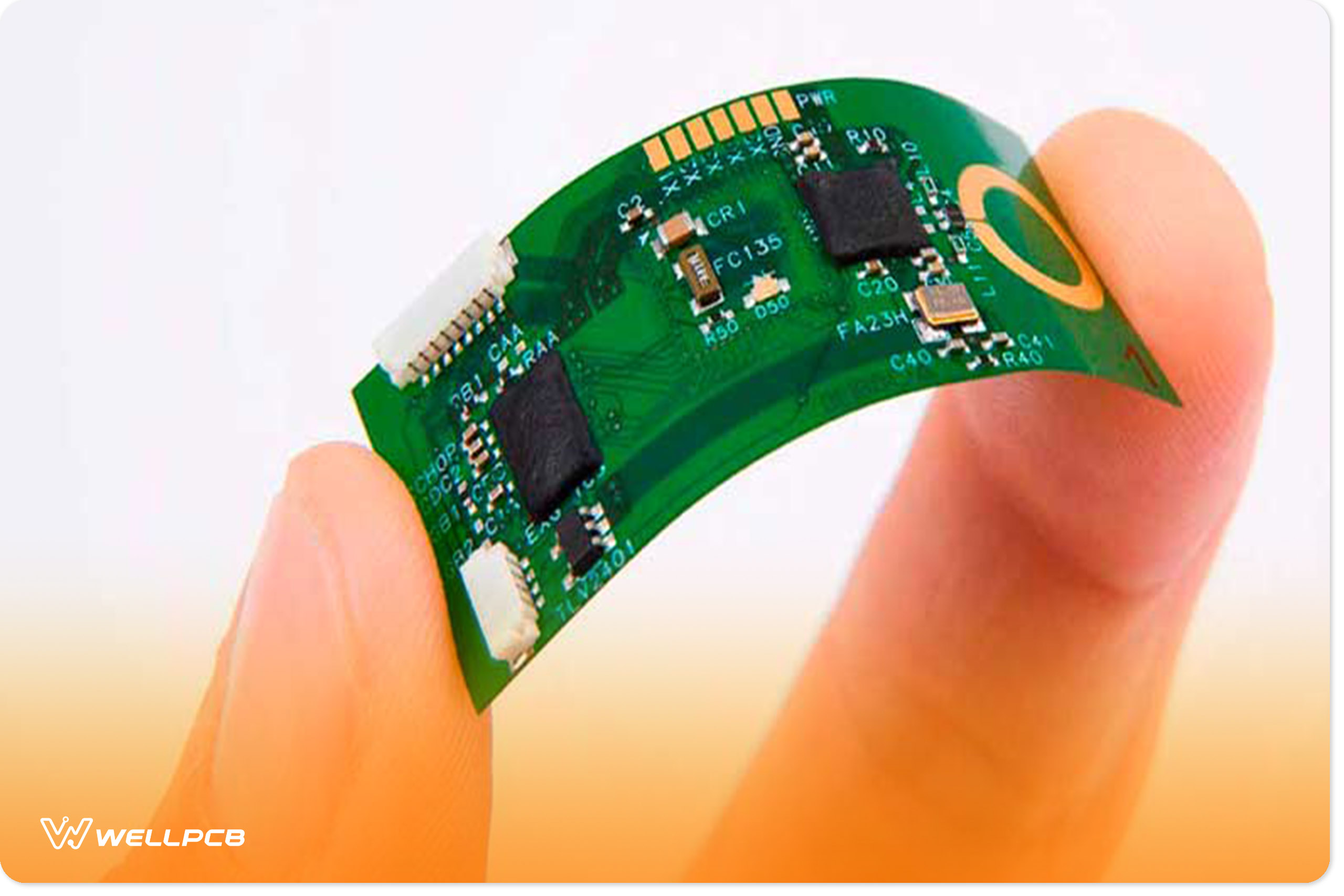
It allows limited bending during installation but is not designed for repeated flex cycles. Dielectric thickness is typically <100 µm with 1 oz copper.
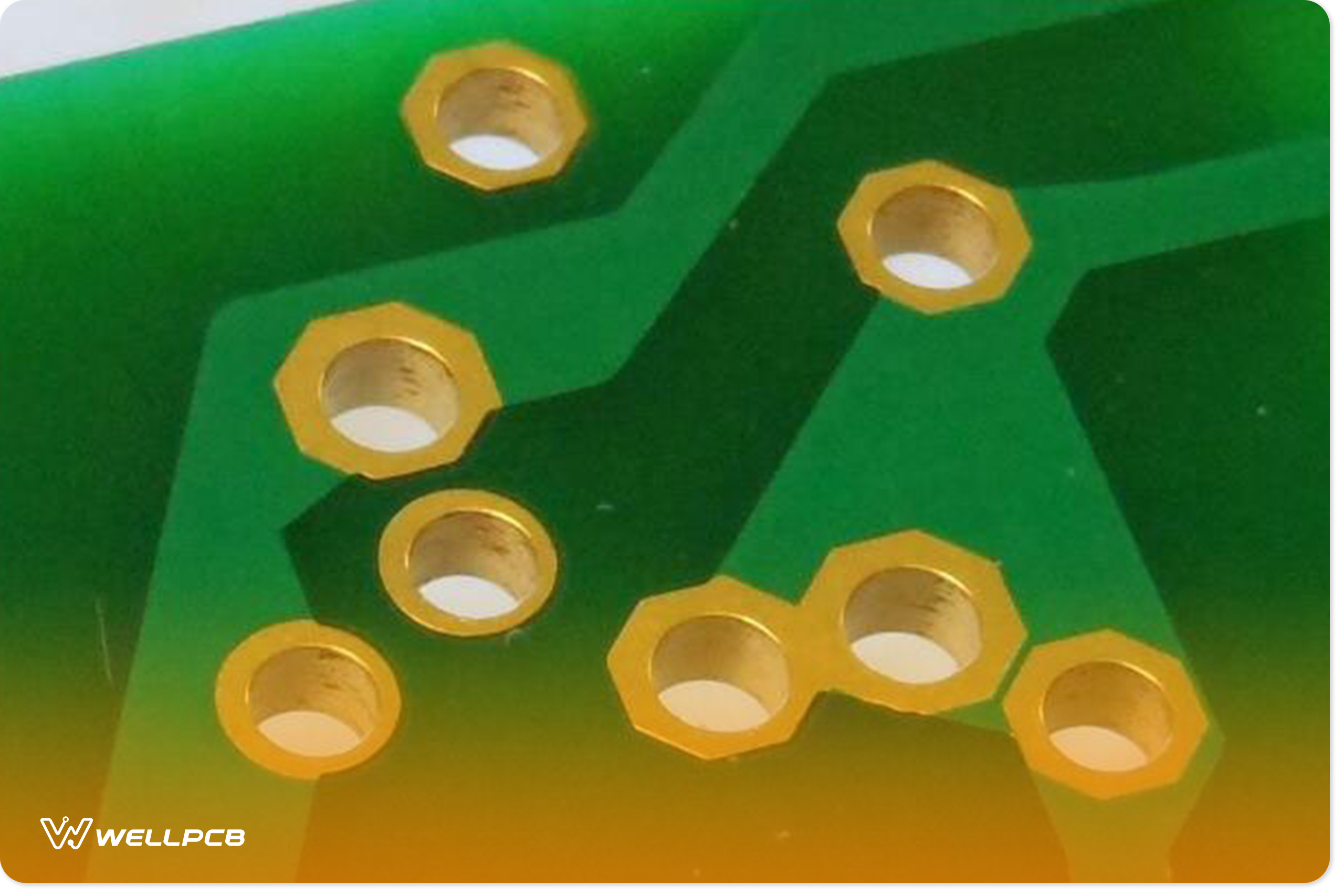
Through-Hole Aluminum PCBs
This allows plated connections without electrical contact to the aluminum.

Multilayer Aluminum PCBs
It includes plated through vias and supports higher routing density. Copper thickness ranges from 1 to 10 oz, and dielectric layers from 50 to 200 µm.
Hybrid Aluminum PCBs
What is the Production Process
for Aluminum PCB Manufacturers?
Aluminum PCBs are manufactured through a multi-stage process that involves base material preparation, thermal dielectric bonding, circuit pattern formation, and surface finishing. Each step contributes to electrical isolation, thermal performance, and structural accuracy across rigid metal-backed layers.

Material Selection

Pre-Lamination Preparation

Lamination

Drilling

Etching

Surface Finishing

Electrical Testing

Final Inspection
What are the Production Challenges and Solutions for Aluminum PCB Manufacturers?
Aluminum PCBs introduce distinct fabrication challenges due to the combination of metal substrates, thick copper layers, and thermal constraints. These challenges must be managed with process-specific controls to maintain dimensional accuracy, electrical integrity, and manufacturability.

Copper Etching
Precise CAM compensation, controlled etchant dwell time, and spray angle adjustment are used to maintain line width within tolerance. Etch factor modeling is applied in high-current aluminum PCB designs.
Solder Mask Printing
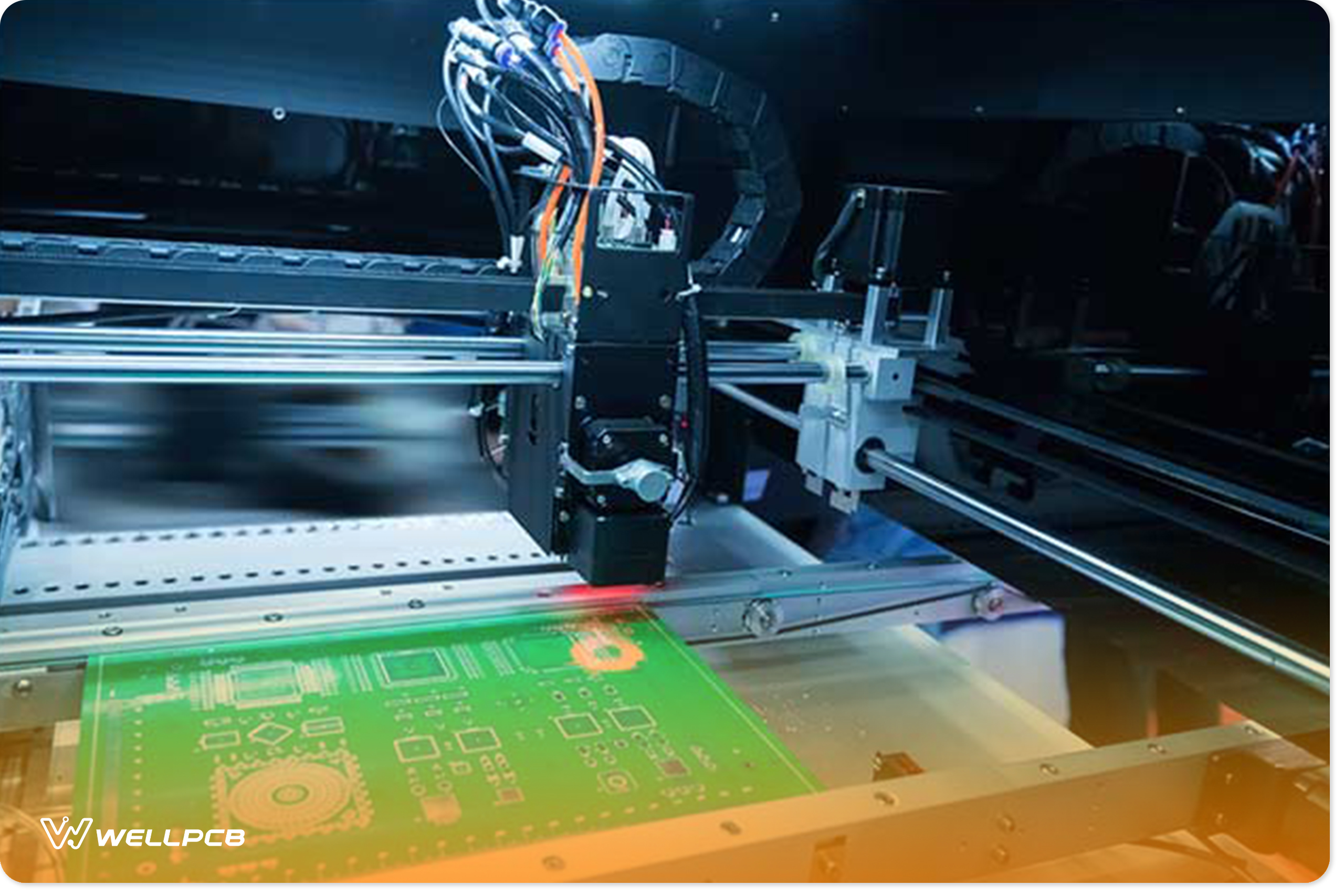
High-viscosity solder mask and ±50 µm alignment accuracy prevent bridging and registration defects.
Mechanical Manufacturing
What Applications Use Aluminum PCBs?

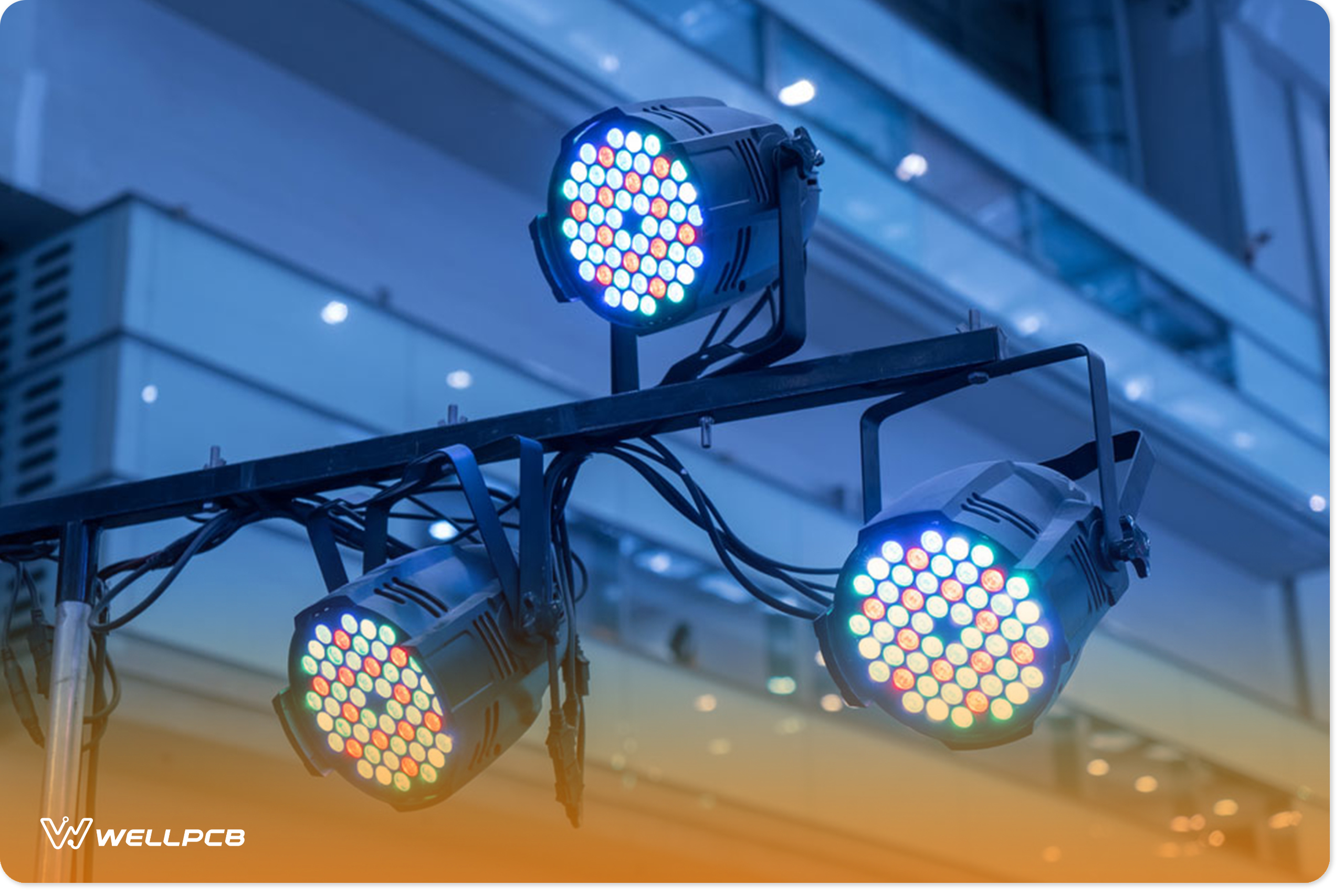
LED Lighting Systems
This prevents thermal degradation of phosphors and stabilizes color temperature.
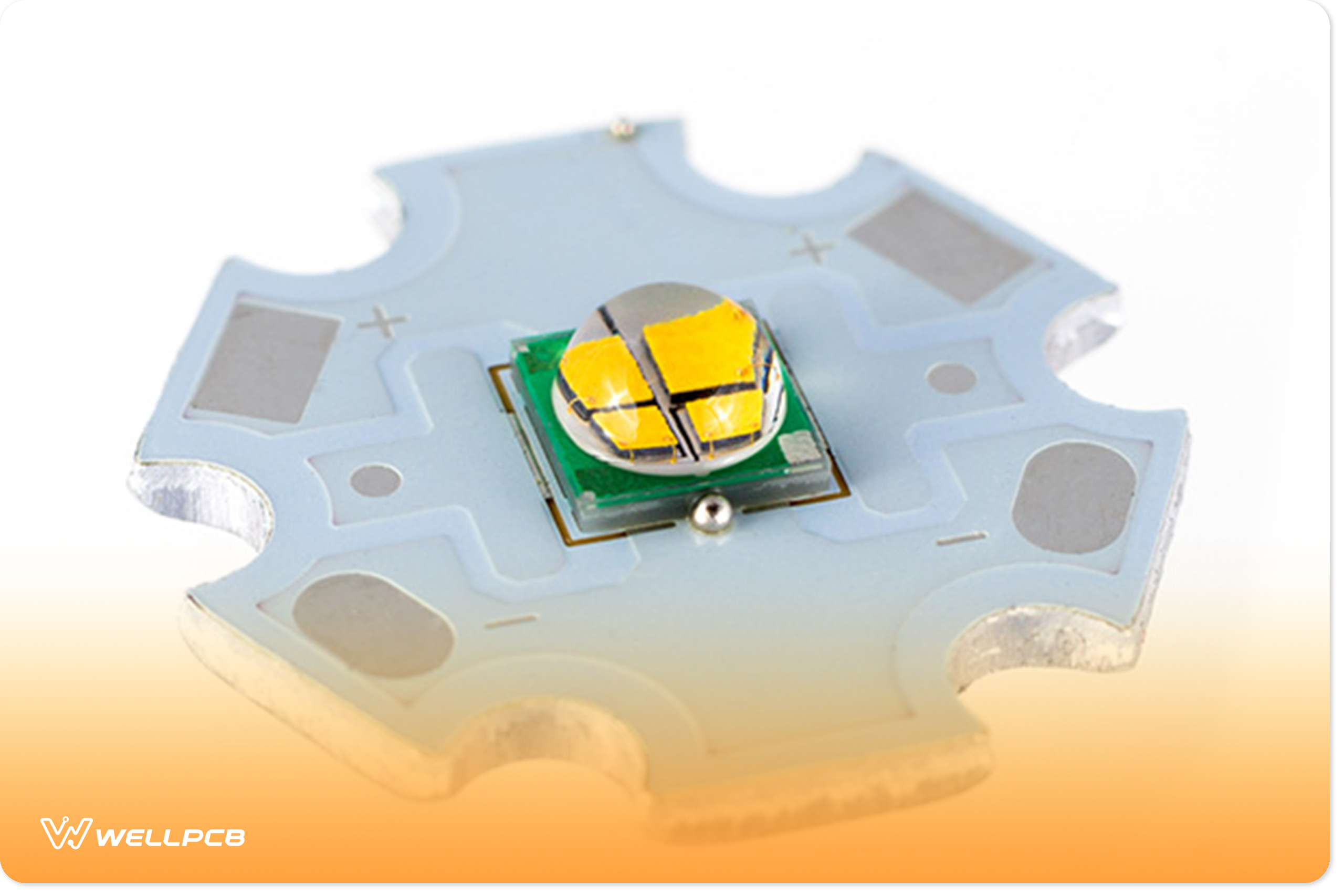
High-power LED arrays often mount directly to the aluminum surface, reducing the need for external thermal pads or heat sinks.

Power Supply Modules
Boards often integrate wide copper pours for low impedance and direct-mounted MOSFETs.
The aluminum base minimizes warping and maintains planarity under component heating cycles.

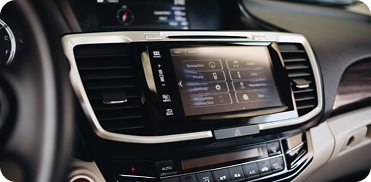
Automotive Electronics
Rigid aluminum layers eliminate the need for additional mechanical support. Boards are often used near engine compartments or external enclosures.
Communication Hardware
The aluminum base layer acts as a low-impedance return path and ground plane.
Hybrid aluminum-FR4 boards may balance heat evacuation and controlled impedance routing.

Industrial and Automation Controls
How to Order Your Aluminum
PCB in 5 Easy Steps

Submit Your PCB Design
Upload your Gerber files or use our easy online PCB design tool to create your board layout. Make sure your files are complete and correctly formatted to ensure smooth processing and production accuracy.

Select Your PCB Specifications
Customize your order by choosing the technical specifications—number of layers, board dimensions, thickness, copper weight, solder mask color, surface finish, and more. Our intuitive interface helps you configure everything based on your project’s needs.

Get an Instant Quote
Once your design and specs are in place, you'll receive a transparent, instant quote. Pricing updates in real time as you modify options, so you can adjust your selections to match your budget before placing the order.

Confirm Order & Make Payment
Review your entire order for accuracy, including file previews and selected specs. After confirmation, proceed to secure checkout and choose your preferred payment method. You’ll receive an email confirmation with order details.

Production & Delivery
Your PCB moves into production immediately. We’ll keep you updated throughout the manufacturing process. Once completed, your boards are carefully packed and shipped to your door, with tracking information provided for your convenience.

WellPCB is trusted by millions of
businesses and innovators.
Why Choose WellPCB?
WellPCB stands out among USA PCB manufacturers by delivering superior quality, advanced solutions, and unmatched reliability. With years of experience serving global markets, WellPCB has earned a reputation as one of the top PCB manufacturers in USA.
WellPCB specializes in multilayer PCBs for advanced electronic applications. You can order these boards with $100 off using our special offer, providing high complexity at competitive rates for demanding projects.


Hommer Zhao
Founder and Chief Editor – Hommer Zhao
Welcome! I’m Hommer Zhao, the founder and Chief Editor of WellPCB. With years of experience in the PCB industry, I’m committed to making sure our content is both accurate and helpful. We’re proud to serve a growing community of over 4,000 customers worldwide, and our goal is to provide you with the best resources and support. Your satisfaction is our top priority, and we’re here to help you every step of the way!

Jesse Holland
Technical Manager – Jesse Holland
Hi, I’m Jesse Holland, an Engineer and Technical Manager at WellPCB. With years of experience in PCB design and engineering, I’m here to ensure that every project we work on meets the highest technical standards. I lead our team, focusing on precision and innovation, collaborating closely with clients to provide tailored solutions and expert guidance. Whether you’re facing a complex design challenge or need advice on technical aspects, I’m here to ensure your project is a success from start to finish.

Nathan Jensen
Purchasing Manager – Nathan Jensen
Hi, I’m Nathan Jenson, the Purchasing Manager at WellPCB. I’m responsible for sourcing the best materials and components to ensure our products meet the highest quality standards. With my extensive experience in procurement, I work closely with suppliers to secure reliable and cost-effective solutions while maintaining strong relationships to support our operations. I aim to ensure every project runs smoothly by providing the resources needed to deliver on time and to your satisfaction.

Emma
Sales Manager – Emma
Hey, I am Emma, sales manager at WellPCB. I studied electronic science and technology at university and have served customers for PCB and PCB Assembly service for several years.
I enjoy communicating with customers and our technicians to solve problems, and customers always say, "It's great to have you onboard".
It is my pleasure and honour to be helpful. Contact me now, and you'll know.

Bella and Cassiel
Sales Representatives – Bella and Cassiel
We’re Bella and Cassiel, your dedicated sales representatives at WellPCB. With our extensive knowledge of the PCB industry, we’re here to provide exceptional service and support. We take the time to understand your unique needs and are always ready to offer tailored solutions and advice. Whether you need product recommendations, assistance with your orders, or simply have a question, we’re here to ensure your experience is smooth and seamless at every step.

Mandy and Wendy
Sales Representatives – Mandy and Wendy
We’re Mandy and Wendy, your friendly sales representatives at WellPCB. Passionate about helping our customers, we bring a wealth of experience in the PCB industry to provide you with the best solutions and service. We take pride in building strong relationships with our clients, understanding their specific needs, and offering personalised support to ensure their satisfaction. Whether you’re looking for advice, product information, or assistance with any part of your order, we’re here to make your experience as smooth and efficient as possible.
Our Team
Our skilled engineers and technicians bring expertise and precision to every PCB assembly project. Committed to quality, efficiency, and innovation, our team ensures every order meets the highest UL, IPC, ROHS & REACH standards, delivering reliable solutions tailored to your needs.
- Founder and Chief Editor – Hommer Zhao
- Technical Manager – Jesse Holland
- Purchasing Manager – Nathan Jensen
- Sales Manager – Emma
- Sales Representatives – Bella and Cassiel
- Sales Representatives – Mandy and Wendy
Aluminum PCB Manufacturer Case Studies
Case Study
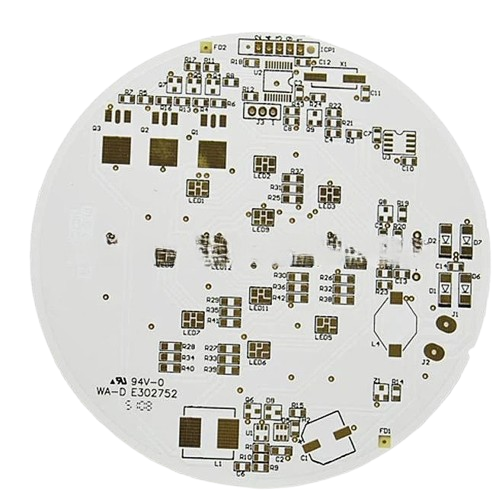
This single-layer aluminum PCB is built to support high thermal conductivity, mechanical stability, and efficient power handling, ideal for LED lighting systems, power modules, and industrial drivers. With a 1.0mm aluminum core and 70µm copper, it ensures superior heat dissipation and durability.
Product Specifications:
- PCB Type: 3W Aluminum PCB (Metal Core PCB)
- Layer Count: 1 (Single-sided)
- Total Thickness: 1.05 mm
- Core Material: Aluminum base, 1.0 mm
- Copper Thickness: 70 µm (2 oz)
- Surface Finish: Lead-Free HASL (LF HASL)
- Minimum Line Width/Spacing: 20 mil (0.508 mm)
- Thermal Conductivity: Typically 2–3 W/m·K (material-dependent)
- Application: Power modules, LED lighting, automotive
Case Study
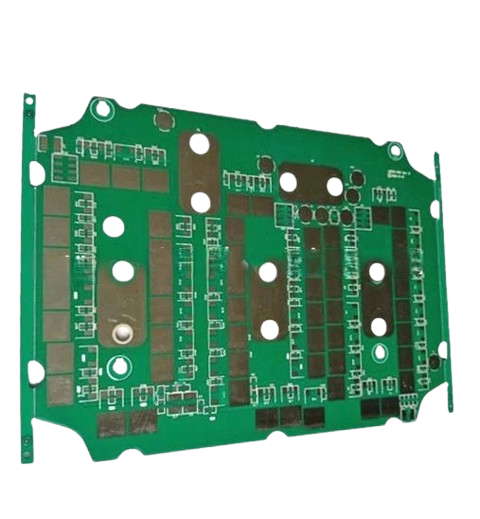
This single-layer aluminum base PCB is designed to deliver reliable thermal management, high-density routing, and cost-effective performance. With 1000+ test points, fine-pitch resolution, and a robust 1.6 mm aluminum base, it's ideal for applications such as LED modules, power drivers, and industrial electronics where heat dissipation and signal reliability are critical.
Product Specifications:
- Layer Count: 1 (Single-sided)
- Base Material: Aluminum
- Board Thickness: 1.6 mm
- Copper Thickness: 35 µm (1 oz)
- Minimum Hole Diameter: 0.2 mm
- Minimum Line Width / Spacing: 4 mil / 4 mil (0.1 mm / 0.1 mm)
- Solder Mask Color: Green
- Silkscreen Color: Black
- Surface Finish: HASL (Hot Air Solder Leveling)
- Testing Points: 1000+
Case Study
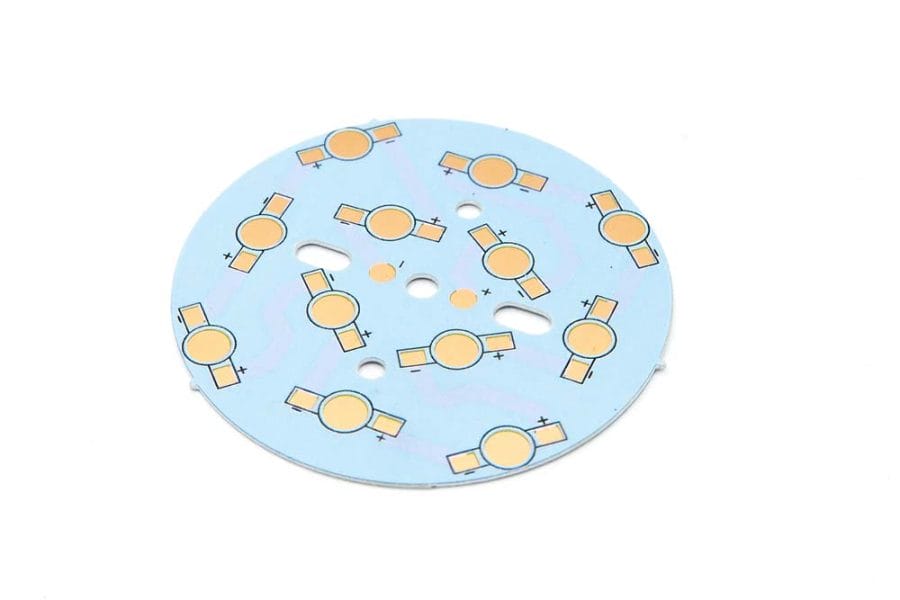
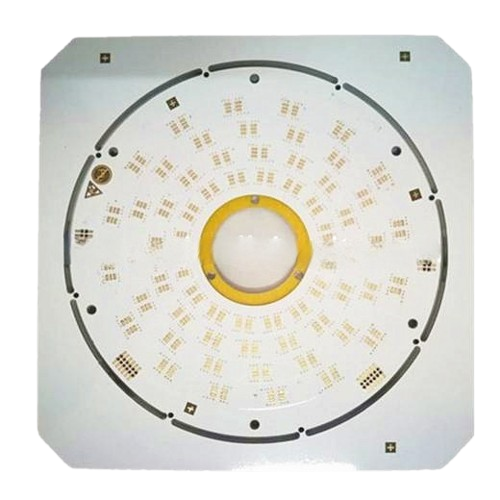
This compact 3W aluminum PCB is specifically engineered for thermal-sensitive lighting applications, such as LED flashlights, bulbs, and spotlights. Its aluminum base ensures effective heat dissipation, supporting longer LED lifespan, stable operation, and compact thermal design for high-brightness output.
Product Specifications:
- Material: Aluminum base plate
- Power Rating: 1W / 3W
- Board Diameter: 20 mm (Round Board)
- Thickness: 1.4 mm
- Copper Thickness: Typically 35 µm (1 oz)
- Color: White (solder mask or silkscreen)
- Surface Finish: Optional (commonly LF HASL or ENIG)
- Application: LED flashlights, LED bulbs, LED spotlights
Our Aluminum PCB Manufacturer Client Feedback
As an R&D manager, I have had an outstanding experience working with WELL-PCB. For many years, our company has entrusted them with the production, assembly, and programming of the boards developed in our R&D unit, and they have consistently exceeded our expectations.
Hamid Reza Moshayedi
R&D Manager
Their work is very impressively perfect. Today, when they check our company PCB board after assemble. They found a fake short point which many engineers has never found in the past years. But that is just designed so. The PCB board quality is excellent. Their service is also excellent.
MikeZ
My friend introduced WellPCB to me, the first try, a little look forward to. I ordered a 47*72 10ps PCB, and I can’t wait to receive my PCB. So I used expedited service and received my PCB in three days. I tested and soldered the PCB, Quality is really good, silkscreen, plating also great.
Warren Cliton
Aluminum PCB Manufacturer FAQs
How do you choose the right thickness of aluminum substrate for my PCB?
Start by calculating the expected heat load from active components. Higher thermal dissipation requires thicker cores (2.0 to 3.2 mm) to reduce thermal resistance. For compact layouts or low-power LEDs, thinner substrates (0.8 to 1.6 mm) are sufficient. Factor in mechanical stiffness, enclosure clearance, and total board mass when selecting core thickness.
What is the significance of edge plating in aluminum PCBs?
Edge plating creates a continuous copper path along board edges, improving EMI shielding and ground continuity. It also reinforces mechanical edge strength in boards subject to insertion or sliding contact during installation.
Can you handle high-frequency aluminum PCBs or LED applications?
Yes, WellPCB manufactures aluminum PCBs for RF circuits, high-brightness LED arrays, and high-current drivers. Options include hybrid aluminum-FR4 structures, tight trace control for impedance, and thermal vias for high-output LED configurations.
What needs to be considered during the manufacturing process of aluminum circuit boards?
Design factors include layer stack-up, aluminum alloy selection, dielectric conductivity, and thermal resistance. The PCB layout must account for heat path, component density, and mechanical mounting. Material selection and via design should reflect application-specific needs such as LED output, RF signal routing, or power regulation.
Need an Aluminum PCB Manufacturer? Choose WellPCB.
WellPCB delivers cost-effective, high-reliability aluminum PCBs. Get started with a free quote today or contact us to discuss your requirements with our experts.